
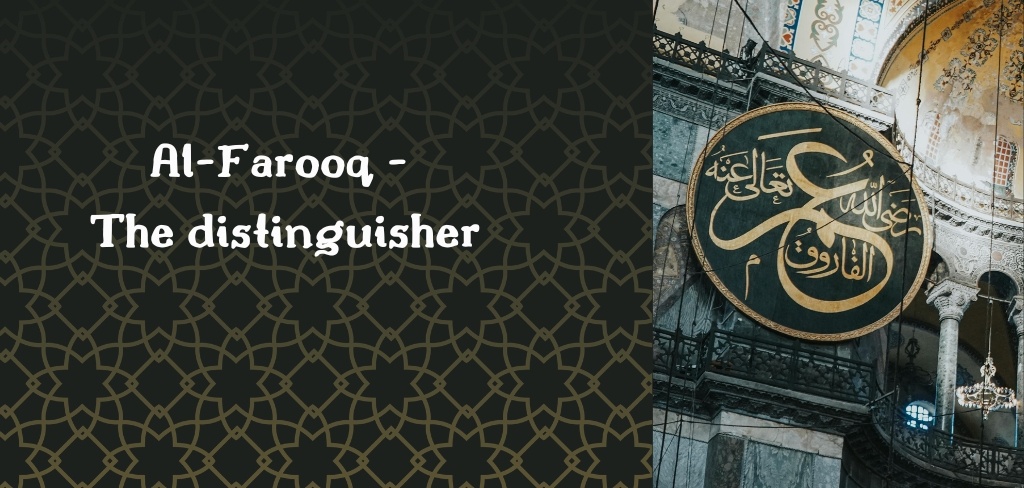
Who Was Umar ibn Al-Khattab?
It is reported from Sufyan ibn ‘Uyaynah (may Allah have mercy on him) that a man once asked Ali ibn Husayn ibn Ali ibn Abi Talib: “What was the status of Abu Bakr and Umar ibn Al-Khattab with the Messenger of Allah (ﷺ)?” He replied: “Their place with him then was like their place with him today (referring to their graves).” The Prophet Muhammad (ﷺ) said: “Allah, the Exalted, has placed truth on Umar’s tongue and he speaks it.”
He is Umar ibn Al-Khattab ibn Nufail Al-Qurashi Al-Adawi (RA), nicknamed Abu Hafs. Born in Mecca in 586 CE to the Banu Adi clan of the Quraish tribe, he experienced a life of poverty and need, tasting the harshness and cruelty of life. He worked as a camel herder, which had a great impact on his personality, making him more resistant to difficulties and more capable of bearing responsibility. In his youth, he moved into trade and was able to accumulate wealth.
Sayyiduna Umar and Islam
When the Prophet Muhammad (ﷺ) received the revelation from Allah through the Angel Jibril, he kept his call for Islam private for three years. He only called the people who he believed would accept Islam. After that, the call for Islam became slightly public, and news spread that the Prophet Muhammad (ﷺ) was calling for a new religion and his followers were increasing. His people felt worried, as they believed this new religion would change the structure of the tribes. Islam came to make people equal, destroying the worship of idols and calling people to worship Allah alone. Consequently, the people of Quraish felt threatened, and Sayyiduna Umar ibn al-Khattab was one of them. He opposed Islam and even threatened to kill Prophet Muhammad (ﷺ). He was adamant and cruel in opposing the Messenger of Allah (ﷺ) and very prominent in persecuting Muslims. However, the Prophet Muhammad (ﷺ) knew the nature of Sayyiduna Umar—that he was a strong man and his conversion would benefit Islam. It was narrated by Sayyiduna Ibn Umar that the Messenger of Allah (ﷺ) said: “O Allah! Honor Islam through the dearer of these two men to You: Through Abu Jahl or through Umar bin al-Khattab.” He said: “And the dearer of them to Him was Umar.” And this Dua was answered for Sayyiduna Umar ibn Al-Khattab.
The Conversion of Umar ibn Al-Khattab
Sayyiduna Umar ibn Al-Khattab was determined to kill the Prophet Muhammad (ﷺ) after witnessing the changes he was making. One day, he took his sword and headed towards the Prophet (ﷺ). On his way, Umar met his friend Nuaim ibn Abdullah, who had secretly converted to Islam. To divert him, Nuaim told Umar to inquire about his own household, where his sister and her husband had already embraced Islam. When Umar reached his sister’s house, they were reciting Surah Taha with a companion named Al-Khabbab, who hid as soon as he felt Umar approaching. Umar heard the sound of recitation and confronted them. When they admitted entering the true religion, Umar pounced on his brother-in-law. His sister stepped in to protect her husband, but Umar struck her in the face. Seeing the blood on his sister’s face, he calmed down out of guilt and asked to see what they were reciting. His sister refused at first, saying: “You are unclean, and no one who is unclean may touch the Scripture. Go and perform Ghusl (purification).” Umar did so, and she gave him the parchment. He read until he reached the words of Allah Almighty:
“Indeed, I am Allah. There is no deity except Me, so worship Me and establish prayer for My remembrance.” (إِنَّنِي أَنَا اللَّهُ لَا إِلَٰهَ إِلَّا أَنَا فَاعْبُدْنِي وَأَقِمِ الصَّلَاةَ لِذِكْرِي). (Surah Taha, 20:14)
Deeply moved, Umar said: “Guide me to Muhammad.” Hearing this, Al-Khabbab came out of hiding and said: “Glad tidings, O Umar! I hope that the Prophet’s (ﷺ) prayer—”O Allah, honor Islam with Umar ibn al-Khattab or Amr ibn Hisham”—has been answered through you.” He then took Umar to the Messenger of Allah (ﷺ), where he declared his conversion to Islam.
Sayyiduna Umar left his sister’s home and headed to the house of Arqam at the foot of Safa hill, where the Holy Prophet (ﷺ) was staying. Umar knocked at the door, and the guard inquired, “Who is there?” Umar replied, “Umar ibn Al-Khattab.” Peeping through the door, the guard saw that Umar was girded with his sword and hesitated to open. Sayyiduna Hamza (RA) said to the guard, “Open the door; if he comes in peace, he is welcome. If he is bent on mischief, we are enough to overpower him.” Once inside, Sayyiduna Hamza caught him by the hem of his cloak and asked, “Umar, what brings you here?” The Muslims surrounded him with drawn swords, ready to intervene if he showed any signs of violence. Hearing the commotion, the Holy Prophet (ﷺ) came out from his inner chamber and said, “Leave him; let him come forward.” As Umar stepped forward, the Holy Prophet (ﷺ) asked, “Umar, how long will you stray from the path? Has the time not come for you to see the truth?” Umar replied, “Verily, the time has come for me to see the truth. I have come to profess my faith in Islam.” The Holy Prophet (ﷺ) stretched out his hand, and Sayyiduna Umar held it with reverence, saying: “I declare that there is no god but Allah, and that Muhammad is the Messenger of God.” In immense joy, the Muslims shouted “Allahu Akbar!” The Holy Prophet (ﷺ) embraced Umar, and the other Muslims followed, embracing him one by one. Umar was the fortieth person to embrace Islam, at the age of 26.
Umar’s Role in Supporting the Muslims
The conversion of Sayyiduna Umar ibn Al-Khattab (RA) was not merely a personal change of faith; it was a pivotal turning point that shifted the course of Islamic history. From a fierce opponent to the strongest pillar of the Ummah, his journey reminds us that the truth has the power to melt the hardest hearts. His arrival brought dignity to the Muslims and strength to their cause, proving that when Allah guides a soul, He transforms it into a beacon of justice and courage. May Allah be pleased with Al-Farooq, the one who separated truth from falsehood.
[…] Skip to content info@jannatalquran.com Read Al-Farooq And Islam Cleanliness In Islam Al-Kawthar And The Intercession Lady Khadijah Bint Khuwailid Al-Farooq – The Distinguisher […]
[…] him and he conversed in the same very state (the Prophet’s thigh or shank uncovered). Then `Umar sought permission for entering and it was given to him and he conversed in that very state. Then […]